The Personal AI Agents Summit brings together leading experts from Anthropic, OpenAI, Google, and Perplexity alongside the maintainers of OpenClaw and NanoClaw, the two open-source runtimes at the center of the personal-agent space, for a free, single-track virtual event on July 21st, 2026. Across nine sessions, the day moves from agent security, through building and running personal agents, into extending them with custom tools and taking them to production. The program mixes short talks with hands-on workshops; each entry below notes which, along with the level and the abstract as published. Where the program does not yet list an abstract, the entry gives title, speaker, format, and level only.
Trusting Powerful Agents: a Security Perspective
Max McGuinness, Member of Technical Staff at Anthropic, gives an intermediate-to-advanced talk. Personal agents are most useful when they can run commands, send messages, browse the web, and delete files, and those same capabilities mean a well-intentioned model can still take a harmful action in pursuit of a goal. McGuinness presents a framing drawn from Anthropic engineers building agentic products like Claude Code and Claude Cowork: every action an agent wants to take resolves one of three ways — block it, allow it, or triage it for permission — and each fails in its own way when overused. The talk covers how those decisions shift depending on the user, from developers who can read a bash command to knowledge workers who cannot, and what prompt injection means for agents that read untrusted content. McGuinness created the initial system prompts for Claude Cowork and wrote "How we contain Claude across products" for Anthropic's engineering blog.
Learning objectives: understand several ways to frame agent security; recognize the failure modes of excessively allowing, triaging, or denying agent actions; and consider agent risk holistically, knowing when some risk is acceptable and how to mitigate it by controlling blast radius.
Building with Gemini: AI Studio, Gemini APIs, and the Future of Personal AI Apps
Paige Bailey, DevRel Lead for GenAI at Google, opens the day with an intermediate workshop. The session introduces Google AI Studio and the Gemini APIs and shows how developers can prototype, test, and deploy AI-powered experiences. It looks at how Gemini can support personal AI apps that are contextual, multimodal, and tailored to individual needs, with practical use cases, development workflows, and best practices for turning an idea into a working application. Bailey previously served as a product lead for Google's PaLM 2 and Gemini models and as an applied machine learning engineer at Microsoft and GitHub.
Enterprise Grade Multimodal Agentic Systems: From PoC to Production
Shikhar Kwatra, Head of Partner AI Deployment Engineering at OpenAI, gives a beginner-to-intermediate talk on moving enterprise-grade multimodal agentic systems from proof of concept to production. A full abstract is not yet published in the program.
Your Second Brain: Building Personal Agents That Actually Run Your Day with Claude Code
Cole Medin, founder and creator at Dynamous AI, runs a beginner-to-intermediate workshop on building personal agents with Claude Code. A full abstract is not yet published in the program.
Build Your Own Secure Personal AI Agent
Ethan Muñoz, Founding Engineer of Open Source at NanoCo, the company behind the open-source runtime NanoClaw, leads an intermediate hands-on workshop. The session covers designing and developing AI agents that assist with personal workflows while keeping safety, privacy, and control central. Participants work through agent architecture, secure tool use, permissions, data handling, and responsible automation, aimed at developers who want to build personal assistants that are useful, trustworthy, and ready for real-world use.
From Prompts to Systems: What 6 Months of Running OpenClaw Agents Taught Me
Ashish Bhatia, Director of Product Management at Audible, gives an intermediate talk. Bhatia frames recent AI adoption as three waves: access through chat interfaces, reasoning through advanced models, and agentic coding through tools like Claude Code and Codex. He then reports on running OpenClaw not as a prototype but as a system that operates daily, makes decisions, and occasionally fails. Three patterns emerged: the harness matters more than the model, since the orchestration layer connecting memory, tools, and workflows is the real source of reliability; memory and evolving instructions act as force multipliers over stateless interactions; and sustained use over days and weeks reveals reliability and failure modes that demos hide. The talk's throughline is a shift from AI as tools you use to systems that work for you.
Using Personal AI in 2026: OpenClaw and the New Developer Workflow
Brad Groux, Co-Founder and OpenClaw, Open Source Maintainer for Microsoft Integrations, and of Digital Meld, runs an intermediate hands-on workshop. Built on OpenClaw Dev Days materials, the session guides participants along a repeatable path from messy stakeholder discovery to a scoped product plan, a PRD, implementation artifacts, and a working local app. It shows how OpenClaw supports planning, context management, and agentic workflow design while keeping safety, reviewability, and human judgment central, with an emphasis on reaching a real operator win quickly and teaching workflows rather than tools.
Custom MCP Server Architecture for Personal AI Assistance
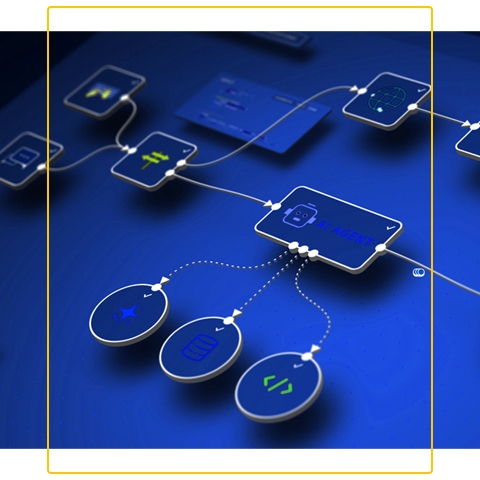
Gigi Sayfan, Member of Technical Staff at Perplexity, leads an intermediate hands-on workshop. An AI assistant is only as useful as the tools it can reach, and the Model Context Protocol is the standard that makes those tools portable: write a capability once and plug it into any MCP-aware host without per-app glue code. The workshop starts from the agentic loop (framework, LLM, tool call, local execution, result), locates where MCP fits, and compares MCP to handing an agent a CLI. Participants build a real MCP server from scratch in Python, test it with no LLM in the loop, and wire the same unchanged server into four different assistants live, closing on the security implications of running tools that act on your behalf.
What participants walk away with: a mental model of the agentic loop and where MCP sits in it; a custom MCP server they built and tested; the steps to integrate it into AI-6, Claude Code, Codex, and OpenCode; and a feel for tool-design trade-offs and the security caveats of local MCP servers. The session suits developers comfortable with Python and the command line who want their own tools in the mix; coding along calls for a laptop with Python 3.10+ and uv, plus an OpenAI key or a local Ollama model.
Using Personal AI Agents in 2026
Brian Turcotte and Brendan O'Leary, Developer Relations Engineers at Kilo, run a workshop on using personal AI agents in 2026. A full abstract is not yet published in the program.
Moderator
Gerry Wolfe, AI Consultant and Engineer at Lambda Engine, moderates the day.
The full schedule, session times, and registration are at summit.ai.